hubbuy Hiking Shoe Grip Guide
hubbuy Hiking Shoe Grip Guide
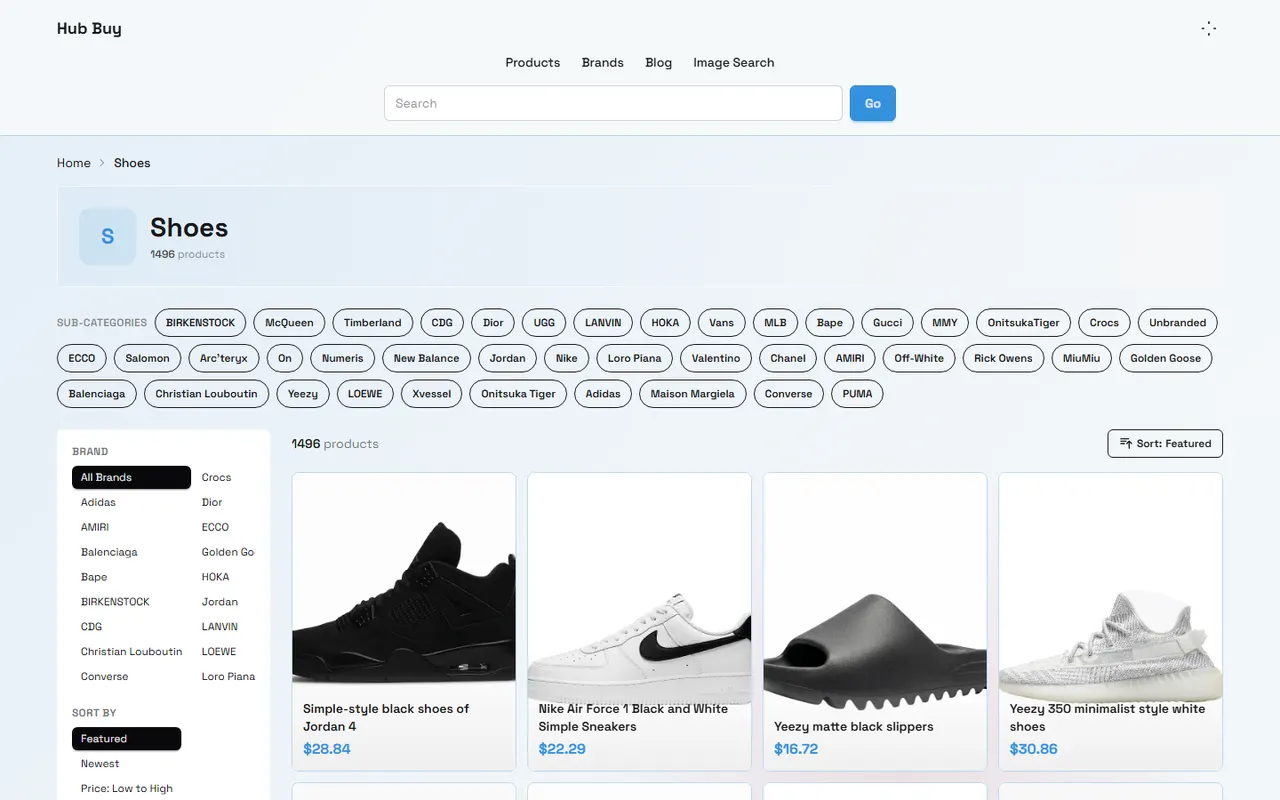
You can't judge a hiking shoe's grip just by the product title, nor can you assume that because the outsole tread looks aggressive, it's automatically suitable for wet, slippery trails. A more reliable approach is to first clarify the route and weather, then cross-check the product page specs, outsole photos, coverage area, and QC images.
This article focuses on one pre-purchase task: filtering candidates on hub-buy.net to find hiking shoes with relatively complete outsole evidence that are worth further verification for your intended route. We won't treat product page marketing language as actual wet-condition test results, nor will we present image observations as if we've worn or field-tested the shoes.
Clarify Your Hiking Route, Weather, and Terrain Task
First, write down exactly what kind of trails you'll be on before deciding which outsoles are worth keeping on your shortlist. City parks, dry gravel paths, forest dirt trails, and rocky terrain after sustained rain all demand different levels of grip.
Before buying, answer these questions:
Will the main surface be asphalt, dirt, gravel, mud, or exposed rock?
Will you frequently encounter wet grass, shallow water, mud, or dew-covered ground?
Is the hike a short urban walk, or a multi-hour mountain route?
Does the route include descents, side slopes, or sections where you'll step on rocks frequently?
Do you prioritize lightweight, drainage, durability, or a safety margin on wet surfaces?
If you'll mainly use the shoes on city sidewalks and dry park paths, an excessively deep outsole tread may not bring proportional benefits; it might just add weight and make cleaning harder. But if your route includes wet rock faces or loose scree, you need to scrutinize the tread direction, rubber coverage, and the continuity of the outsole edge more carefully. 🥾
Distinguish Between Product Page Specs and Unverifiable Grip Claims
The information a product page can actually support usually includes outsole material, upper material, outsole photos, size info, weight, and waterproofing claims. But these fields can't prove how the shoe actually performs on a specific wet surface.
Think of the information in three layers:
Directly verifiable info: product name, page images, seller-provided materials, outsole structure description, and visible size chart.
Info that requires image interpretation: tread depth, lug arrangement, coverage on forefoot and heel, and whether the edges have continuous rubber.
Info that cannot be confirmed from the product page alone: wet-rock grip, mud-shedding ability, long-term wear performance, and actual comfort.
For candidate products on hub-buy.net, first confirm the page loads properly and has a clear product name plus enough visible information to support filtering. Pages with redirects, blank content, tag-only listings, or just marketing slogans without clear outsole details should not be treated as complete evidence.
Words like "non-slip," "outdoor professional," or "suitable for complex terrain" are only clues to verify later. Unless the page provides clear structural details, test conditions, or reviewable specs, don't interpret these terms as a guarantee of wet-surface performance.
Filter Candidates by Outsole Tread Pattern and Rubber Coverage
When looking at outsole photos, prioritize whether the structure matches your route, not whether the tread looks dramatic.
Candidates worth further verification should generally have the following visible evidence:
Continuous, clear ground-contact tread on both forefoot and heel;
Enough spacing between lugs so mud doesn't completely pack the grooves;
Multi-directional lugs in the forefoot, not just parallel stripes;
A clearly defined braking edge on the heel to support stability judgments on descents;
No large gaps in the outsole edge or high-wear contact zones;
Rubber coverage consistent with the outsole photo, not severely cut by exposed midsole foam.
Deeper tread doesn't mean safer on all surfaces. Deep, dense lugs may work well on soft dirt, but on hard wet rock they can reduce effective contact area. Conversely, a flatter outsole is easier to walk in on city pavement, but may lack mud-shedding and stability on mud or loose scree.
Replace "parameter worship" with "route matching": if your route is mainly dry gravel, first check forefoot and heel stability; if you'll see mud often, focus on lug spacing and direction changes; if it includes wet rock, don't draw firm conclusions from pictures alone—mark the candidate as needing more evidence.
Inspect High-Wear Zones: Toe, Forefoot, and Heel
Grip isn't just about tread design; it also depends on whether the outsole stays intact after use. Before buying, pay special attention to three areas:
Toe: prone to rock strikes, impacts, and flexing—check that the front rubber wraps over the areas that contact the ground.
Forefoot: responsible for push-off and frequent flexing—see if the lugs are too narrow or arranged in a way that creates weak connections.
Heel: responsible for landing and downhill braking—check for adequate coverage on the lateral side and any obvious single-point wear risk.
If the product page only shows side or upper photos without a clear bottom view of the outsole, you can't reliably judge these three zones. In that case, keep the product link as a candidate but don't rank it as a "grip evidence complete" priority.
Also check the bond between outsole and upper. Even if the tread design looks reasonable, if the outsole edge shows uneven glue, visible gaps at the seam, or other signs of poor adhesion, water ingress, edge lifting, or localized delamination could affect performance later. Especially for low-priced items, avoid judging from a single promotional image. 🔍
Use QC Photos to Verify Outsole Bonding and Tread Integrity
In the actual purchasing process on hub-buy.net, whether you can obtain clear QC photos, their coverage, and the verifiable condition of the item depend on the platform's current pages and order flow. Don't interpret "you can request inspection" as "inspection already done," and don't treat product detail images as QC evidence for the actual pair being shipped.
After receiving QC photos, check them in this order:
Confirm the photos show the correct product and size, not a different item or display sample.
Make sure the outsole is completely visible, with forefoot, heel, and both edges not cropped out.
Check for obvious tread mismatches between left and right shoes, missing chunks, or large stains.
Look for edge lifting, open glue seams, excessive glue overflow, or discontinuous bonding lines.
Compare with the product page images to confirm tread pattern, color, and outsole structure match.
If the photos are blurry, lack angles, or can't confirm critical areas, request additional photos or further verification before shipping.
QC photos help spot visible manufacturing and bonding issues, but they can't substitute for wet-surface friction testing. Photos can't prove rubber compound, real-world durability, or performance on a specific rock surface. For high-risk routes, lower your expectations when evidence is insufficient rather than filling gaps with imagination. 📷
Compare Trade-offs for Wet, Gravel, and Urban Surfaces
The same shoe may perform differently on different surfaces. Use this simplified comparison when filtering:
Environment | Priority Outsole Evidence to Check | Main Trade-offs |
|---|---|---|
Urban pavement & dry park trails | Ground contact continuity, weight, flex zones | Excessively deep tread may add weight and cleaning hassle |
Dry gravel roads | Forefoot and heel coverage, lateral stability structures | Too-soft or too-narrow lugs may affect stability |
Mud and soft ground | Lug spacing, direction changes, mud clearance space | Too-dense lugs may pack with mud easily |
Wet grass, wet rock, or post-rain routes | Clear rubber coverage and complete QC views | Cannot confirm real wet grip without sufficient images |
If a shoe only shows aggressive tread on the product page but lacks clear rubber coverage, outsole edge, and QC evidence, it shouldn't be automatically ranked higher because of looks. Instead, candidates with more complete structural info but fewer marketing words often deserve to advance to the next round.
For routes that may involve wet rock faces, long descents, or loaded hiking, treat "insufficient evidence" as a risk factor. Don't ignore the potential cost of a slip—time, medical, and trip disruption—just to save a few dollars on the product price.
Build a Pre-Purchase Grip and Durability Checklist
Before ordering, record these items one by one:
Target route and most common surface type;
Expected weather and whether wet conditions will be frequent;
Does the product page have a clear bottom view of the outsole;
Are outsole material and structure descriptions clear;
Is there visible outsole coverage on forefoot, heel, and toe;
Does lug spacing match the primary surface needs;
Are there obvious gaps or weak connections at the outsole edge;
Can you obtain QC photos that correspond to your actual order;
Do QC photos show the complete outsoles of both left and right shoes;
Any signs of open glue, missing chunks, obvious stains, or structural deviations;
Have size, return/exchange terms, shipping costs, and possible extra fees been checked for your destination;
Date of verification for current page info and link status.
The purpose of recording these items isn't to create a faux-precise score, but to avoid premature ordering when evidence is insufficient. Prices, stock, page status, logistics costs, and platform processes may change, so re-check current information and applicable destinations on hub-buy.net before publishing or purchasing.
Next Step: Decide Whether to Keep Candidates Based on Evidence Completeness
You can divide candidates into three categories:
Category 1: Candidates with relatively complete evidence. The product page is accessible, has a clear name and outsole photos, forefoot/heel/edge coverage can be observed, and QC photos can further confirm outsole condition. These products are suitable for the next round of checks on size, fees, and shipping terms.
Category 2: Candidates with potential but insufficient data. The tread appearance may fit your route, but there's no bottom view, material description, or complete QC photos. These items shouldn't be rejected outright, but key evidence should be gathered first.
Category 3: Higher-risk candidates. Incomplete page info, abnormal link status, key outsole areas obscured, or QC photos showing open glue, missing chunks, or significant structural deviations. If your route includes wet conditions, long descents, or complex rock faces, do not use these as your primary hiking shoes.
The savings from filtering usually come from reducing wrong purchases and avoiding returns or repurchases due to insufficient data—not from guaranteeing a fixed dollar amount. The cost is your time spent reviewing outsole photos, checking QC images, and accepting that photos cannot prove real wet-surface grip. This approach is for buyers who value evidence and are willing to check items carefully before shipping. It's not for those who need absolute safety assurance on complex wet routes or cannot obtain complete product and QC information.
The final decision should be based on evidence completeness, route risk, and destination suitability—not just a single "non-slip" label.
FAQs for Shopping on Agent Platforms
1. At hub-buy.net, what approach should I take to determine whether an item's quality is acceptable?
Instead of trusting factory-supplied images, which are often edited, always examine the actual QC photographs. Inspect those QC photos carefully to verify that the item matches your particular needs before finalizing any purchase on hub-buy.net. Additionally, steer clear of extremely cheap listings, since such low prices usually indicate poor quality.
2. How can I locate a specific product I wish to buy on hub-buy.net?
You may enter a single keyword into the search bar or browse the relevant category page, where items are also sorted by brand. Shorter queries tend to produce more results than longer phrases, but longer phrases yield more precise matches. For instance, you could search for "Air Force 1 White," "sneakers," or just "Air Force 1" on hub-buy.net.
3. Why would I need to use a spreadsheet when shopping at hub-buy.net?
Since hub-buy.net and similar agent sites do not show products directly, a spreadsheet is necessary to browse for items you like and obtain their purchase links. Another option is to ask for suggestions on Reddit or Discord; the products recommended there are often top-notch, but the process can be time-consuming. These spreadsheets are generally built over a long time by collecting data from those communities.
4. What kinds of products are available on hub-buy.net?
hub-buy.net carries a wide array of categories, such as footwear, tees, sweaters, hoodies, denim, joggers, shorts, swim trunks, factory clearance deals, puffer jackets, baseball jerseys, shirts, hats, jewelry, bags, electronics, sunglasses, socks, underwear, and popular collectibles.
5. Which platform provides the most advantageous coupon codes, and is there one for hub-buy.net?
Kakobuy is worth recommending because it currently provides a $15 discount code with no minimum order value. That is especially beneficial for customers shipping small parcels. Use the code kakobuy888. Note that hub-buy.net does not offer a specific coupon code at this time.
Browse our latest products and find your next favorite item.