hubbuy Mesh Running Shoes for Hot Weather
hubbuy Mesh Running Shoes for Hot Weather
hubbuy Mesh Running Shoes for Hot Weather Buying Guide: Balancing Breathability, Support, and Sun Protection
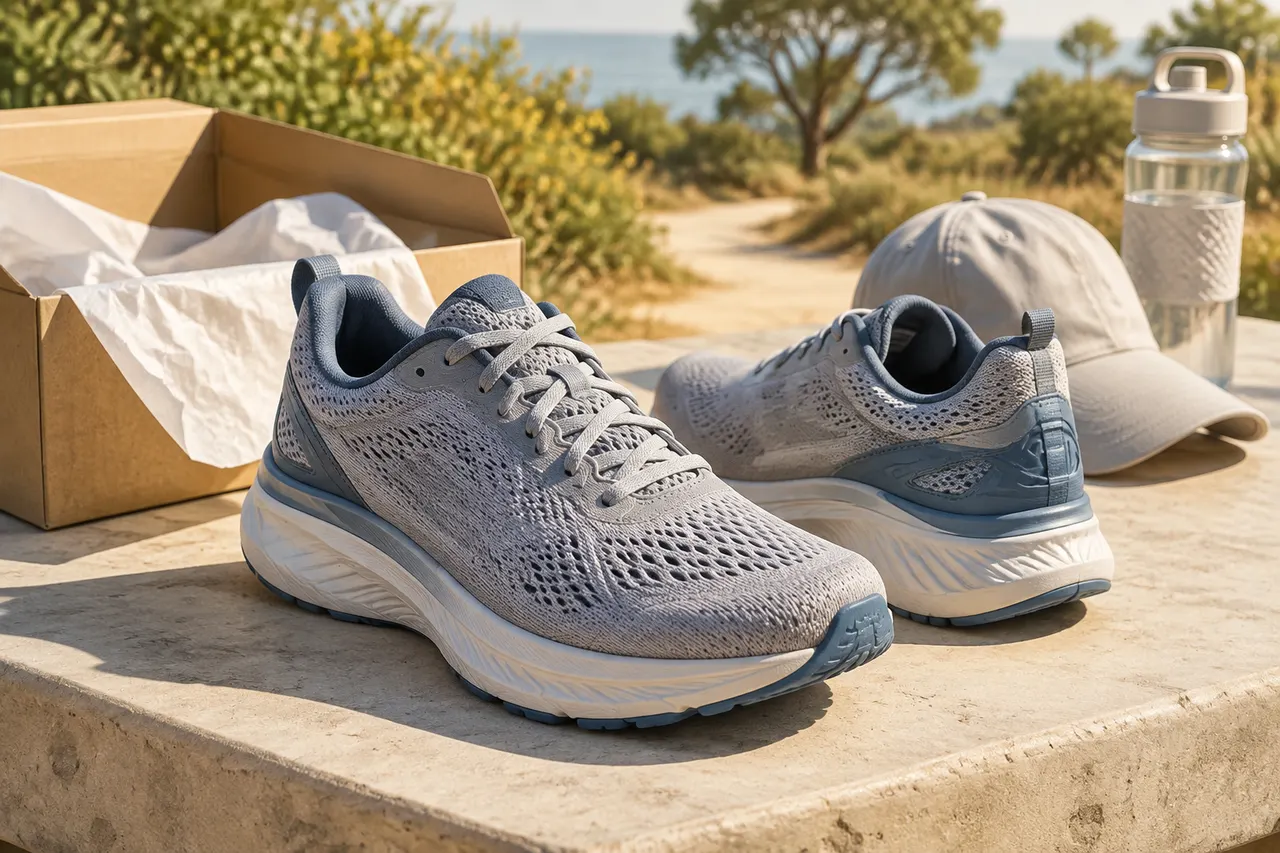
Selecting hot-weather running shoes goes beyond checking mesh size. The real challenge is finding a pair with clear ventilation paths, adequate support in key areas, and sufficient sizing evidence for hot conditions. This guide helps buyers looking for mesh running shoes on hub-buy.net narrow down candidates, verify visible evidence, and complete final checks before payment.
This article is not intended for those seeking medical foot correction advice, experimental data on professional racing shoes, or assessments of cushioning lifespan based solely on product images. Page prices, stock, sizes, material descriptions, seller information, service policies, shipping costs, and taxes are dynamic information. This article does not have access to specific product samples, so it does not recommend any particular model or present image observations as tested conclusions. Such dynamic information should be re-verified on the day of ordering. Method verification date: September 4, 2026.
Clarify Distance, Surface, and Sweat Conditions for Hot-Weather Running
Write down your usage conditions before opening candidate product pages. This prevents mistaking "looks breathable" for "suits my running scenario." 🌡️
Consider recording the following:
Distance per run and weekly frequency, such as daily walking, 3-5 km easy runs, or longer training.
Common surfaces, such as treadmill, smooth asphalt, wet sidewalks, or gravel paths.
Local temperature, humidity, and frequency of sun exposure or sudden showers.
Areas of concentrated sweating, such as forefoot, arch, top of foot, or heel.
Need for wide fit, orthotic insoles, extra room over the instep, or firmer heel lockdown.
Short commutes can prioritize ventilation and quick drying; longer runs also need to consider upper lockdown, friction points, and space after foot swelling. Mesh cannot replace sun protection: covered areas of the foot still require managing sun exposure through socks, running times, and shade, and sparse mesh should not be interpreted as UV protection performance.
Define What Can Be Verified and Performance Boundaries
When viewing a candidate product on hub-buy.net, categorize evidence as "visible on page," "needs supplement," or "cannot be determined from images alone." Product name, marked size, color options, and seller-disclosed material descriptions can be noted, but must be based on the current page. If the page does not state fiber composition, do not assert from texture that it is engineered mesh, polyester, or other material.
From product images alone, the following generally cannot be reliably determined:
Actual breathability and sweat evaporation rate.
Midsole rebound, degradation rate, and long-distance stability.
Slip resistance in hot and humid conditions.
Odor from glue, dye, or materials.
Long-term durability of upper flex areas.
UV protection rating or actual sun protection capability.
If the product page, seller supplements, or subsequent inspection images still cannot answer key questions, mark that item as unknown rather than filling in with promotional language. 🔍 For buyers with high mileage, previous injuries, or special support needs, the lack of key performance evidence is itself a valid reason to drop that candidate.
Assess Ventilation Paths from Mesh Placement, Lining, and Overlays
When examining mesh, don't just zoom in on one forefoot area. Air needs a path to enter, pass over the instep, and exit through other regions. Check the toe box, area above the metatarsals, sides of the tongue, midfoot, and heel area.
Look for these visible clues:
Continuous mesh holes in the forefoot flex zone, not just decorative perforations.
Large areas of dense inner lining; the more complete the lining, the more ventilation may be restricted.
Overlays or reinforcements around the toe cap and eyelets, and whether they cut off main ventilation areas.
Whether the tongue is thick foam with potentially sealed side layers.
Consistency of hole size, layer count, and reinforcement placement between left and right side images.
These clues only help compare structures and cannot be converted into actual temperature or breathability rates. If two shoes lack material layer diagrams or inner photos, you cannot conclude one is cooler just because its mesh is more visible.
Compare Trade-offs Between Breathable Design and Upper Support
Large, soft, and less-overlaid mesh tends to create open ventilation paths but may reduce lateral stability. Conversely, reinforcements around eyelets, midfoot, and toe cap help limit upper displacement but may increase coverage and heat retention. 👟
Choose acceptable trade-offs based on scenario:
Easy runs on smooth surfaces can prioritize forefoot ventilation while confirming the heel does not slip.
Routes with many turns or noticeable lateral movement should emphasize midfoot wrap and eyelet reinforcement.
Wide feet or high insteps require avoiding reliance on tightening laces for support, which may compress the instep and reduce internal space.
For those prone to kicking obstacles, toe protection cannot rely solely on thin mesh, but reinforcements should not press on main flex lines.
Do not press the mesh in the image with your finger to imagine support. Reliable judgment requires at least structural close-ups, sizing information, and return conditions matching the usage scenario; missing any of these should count as risk.
Check Heat Buildup Areas Around Tongue, Heel, and Collar
Heat sensation is not only from the forefoot. Thick tongue, heel foam, and collar lining can become more significant heat buildup areas. When inspecting product images, observe tongue thickness, heel padding extent, collar width, and presence of multi-layer cushioning.
Thick padding is not necessarily bad; it may improve lockdown and reduce local friction. The issue is that the buyer needs to know what they are trading away. If the forefoot mesh is open but the tongue and heel are completely surrounded by thick foam, this shoe may be more suitable for those needing a stable wrap, not for those extremely sensitive to heat or with significant heel sweating.
Socks also affect results. In hot weather, prioritize well-fitting running socks that manage moisture and do not bunch up inside the shoe. When first using new shoes, do a short test run and check for persistent friction on toes, arch, tongue edges, and heel; do not go directly to long distances or activities where you cannot change shoes or socks midway.
Use QC Images to Check Mesh Deformation, Glue Spills, and Left-Right Consistency
If after an order enters the warehouse, the order page on hub-buy.net does provide QC images or allows requesting supplementary angles, follow the actual page functionality and check within the order processing window. Do not assume every order has the same number of images, shooting angles, or after-sales window. 📦
Keep a consistent inspection order:
Look at the overall outline of both shoes and compare toe height, collar shape, and sole curvature for obvious differences.
Zoom in on the mesh and look for snags, holes, abnormal creases, local collapse, or lifted overlays.
Inspect the seam between upper and midsole, distinguishing minor visible glue marks from structural issues like separation or misalignment.
Compare the position of tongue, eyelets, heel markings, and outsole tread patterns on both shoes.
Confirm color, size markings, and ordered options match; if size label is not visible, request clear evidence rather than guessing from appearance.
Shooting angles, lens distortion, and lace tightness can cause visual differences. When a problem is found, save the original image and describe the specific location, e.g., "vertical snag on mesh under third eyelet on right shoe medial side," instead of just writing "poor quality." Whether return, exchange, or cancellation is possible depends on the rules and processing deadline shown at the time of the order.
Create a Candidate Comparison Table for Hot-Weather Running Shoes
The purpose of a comparison table is not to create a false total score but to expose evidence gaps. It is recommended to keep only two to four shoes that truly fit the usage scenario and update dynamic fields on the day of ordering.
Check Item | Candidate A | Candidate B | Eliminating Condition |
|---|---|---|---|
Forefoot and midfoot ventilation path | Record evidence of mesh holes, lining, and overlays | Record evidence of mesh holes, lining, and overlays | Only decorative mesh; main areas covered by dense material |
Upper support | Record eyelet, midfoot, and heel reinforcements | Record eyelet, midfoot, and heel reinforcements | Scenario requires lockdown, but no visible support evidence in key areas |
Heat buildup areas | Record tongue, collar, and heel padding | Record tongue, collar, and heel padding | Thick padding in heat-sensitive areas and no alternative design |
Size evidence | Label, insole length, or seller size chart | Label, insole length, or seller size chart | Only generic size conversion without specific measurement basis |
Dynamic cost | Item price, domestic shipping, international shipping estimate, tax conditions | Item price, domestic shipping, international shipping estimate, tax conditions | Total cost or applicable conditions cannot be confirmed |
Order risk | QC visibility scope, processing deadline, and route restrictions | QC visibility scope, processing deadline, and route restrictions | Critical defects cannot be verified and potential loss is unacceptable |
Do not give an average score to a shoe just because information is missing. For key fields like size, support, or total cost, "unknown" should be more prominent than a low score because it means a reliable decision cannot be made currently.
Complete Pre-Payment Review Based on Size Evidence and Usage Scenario
Before payment, measure foot length and width of both feet later in the day and record the measurement method. Use the larger foot as the basis, then compare with the specific product's insole length, footbed length, or brand size chart. Size numbers from different sellers are not directly interchangeable; "usual size" is only a reference and cannot replace centimeter data.
Before completing the order, confirm each item:
Product title, color, size, and quantity match the cart.
Size basis is from the current product, not another model or generic conversion chart.
Item price, domestic shipping, available routes, estimated billing method, service fees, and possible taxes have been re-checked on the current page.
Destination country import restrictions, declaration documents, and tax responsibilities have been confirmed through carrier, customs, or other official channels.
Not requesting seller or platform to under-declare value or split packages to evade taxes or inspection.
Understand the order processing window and know where to submit requests if size or QC issues are found.
Whether package consolidation saves money cannot be decided by intuition. Only after obtaining actual packaged weight, dimensions, route billing rules, and fixed fees can you compare consolidated vs. split shipping. Consolidation may reduce repeated fixed fees or may increase volumetric weight, package value, and single loss risk; splitting may increase fixed fees but sometimes meets route restrictions. Without these data, do not promise specific savings amounts.
The final decision should clearly state four things: the current confirmed savings amount, what risks are added, who the plan suits, and under what conditions it is not recommended. For the screening method described in this article, without specific candidate products, packaging data, and current shipping quotes, the confirmed savings amount is 0; the main cost added is verification time, but it reduces decision risk from insufficient size evidence, structural misjudgment, and missed dynamic fees. It is suitable for hot-weather runners willing to check evidence item by item; it is not recommended for those who are in a hurry, cannot accept uncertainty in returns, need medical-grade foot support, or cannot obtain key size and structural evidence to continue with the order.
Content note: This article was generated by an automated editorial process based on publicly verifiable principles and does not claim that a real person purchased, wore, or tested any product. Product facts, image rights, brand risks, and dynamic transaction conditions must be re-verified at the time of publication and ordering.
Browse our latest products and find your next favorite item.